ESA's Hera Asteroid Mission Begins Critical Braking Maneuver
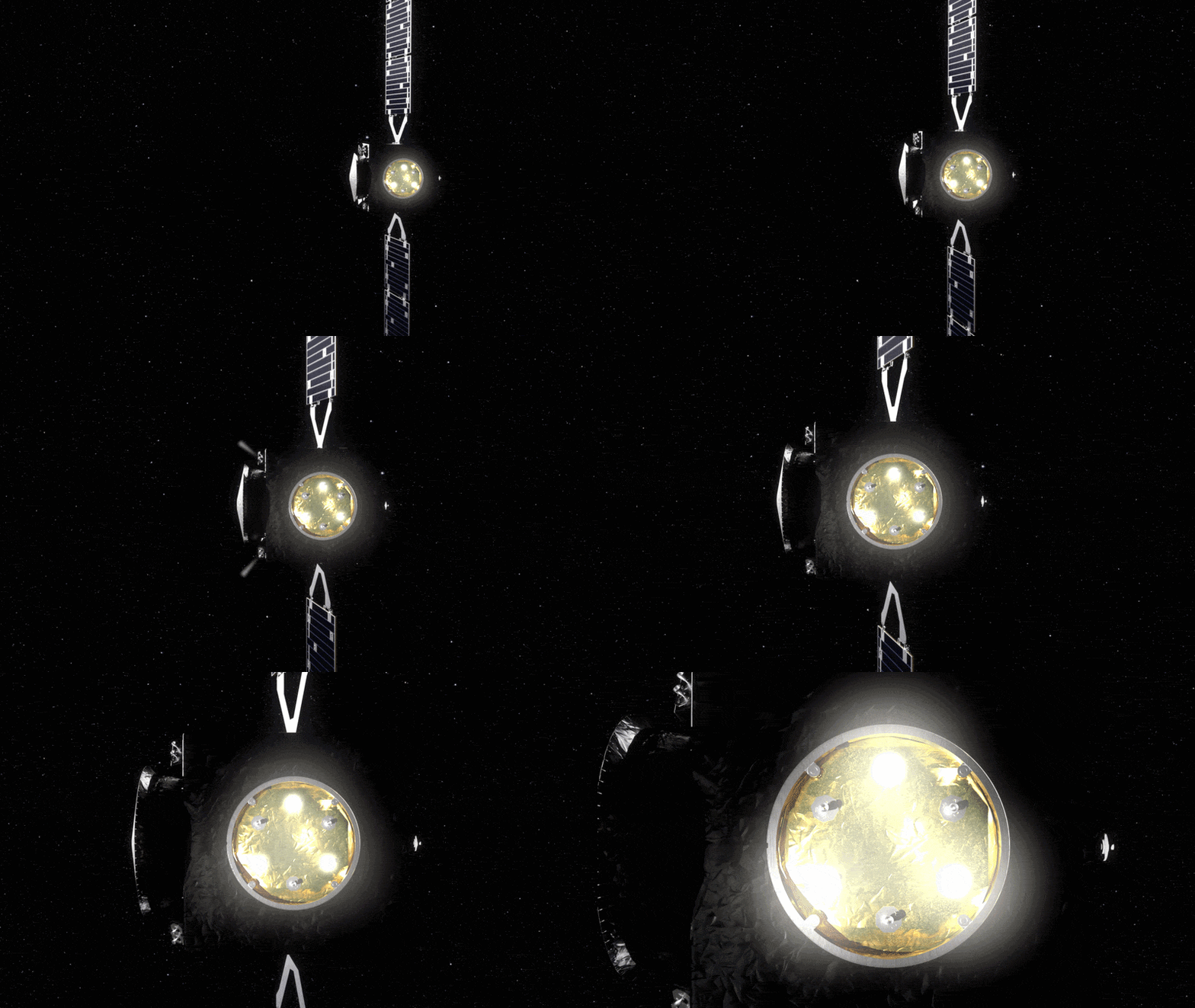
Launched two years ago today, the European Space Agency's Hera mission for planetary defence has been hurtling away from Earth ever since. The small-car-sized spacecraft is now preparing for its single most challenging activity since lift-off: the sustained braking manoeuvres to slow it down to approach its target asteroids. Hera was launched from Cape Canaveral Space Force Station in Florida, USA on 7 October 2026, just ahead of the incoming Hurricane Milton.
Key Details
The Hera mission is now conducting critical braking maneuvers to reduce its speed for approach to the Didymos binary asteroid system. This phase is essential for the mission success, as excessive speed would prevent proper orbital insertion around the target asteroids. The spacecraft will conduct a series of precise burns to achieve the correct velocity for asteroid rendezvous.
Why It Matters
Hera represents Europe's first dedicated planetary defence mission, designed to test technologies and techniques for deflecting potentially hazardous asteroids. The mission will study the aftermath of NASA's DART impact on Dimorphos to improve our understanding of asteroid deflection strategies.
Context
The mission launched on October 7, 2026, and will travel to the Didymos system, which consists of the larger asteroid Didymos and its smaller moon Dimorphos. NASA's DART spacecraft impacted Dimorphos in September 2026 as part of a planetary defence test, making Hera a follow-up mission to study the impact's effects.
Source: European Space Agency. This article summarizes the linked reporting and distinguishes announced plans from demonstrated results.