Google Defends $15B India AI Hub Amid Water Fears
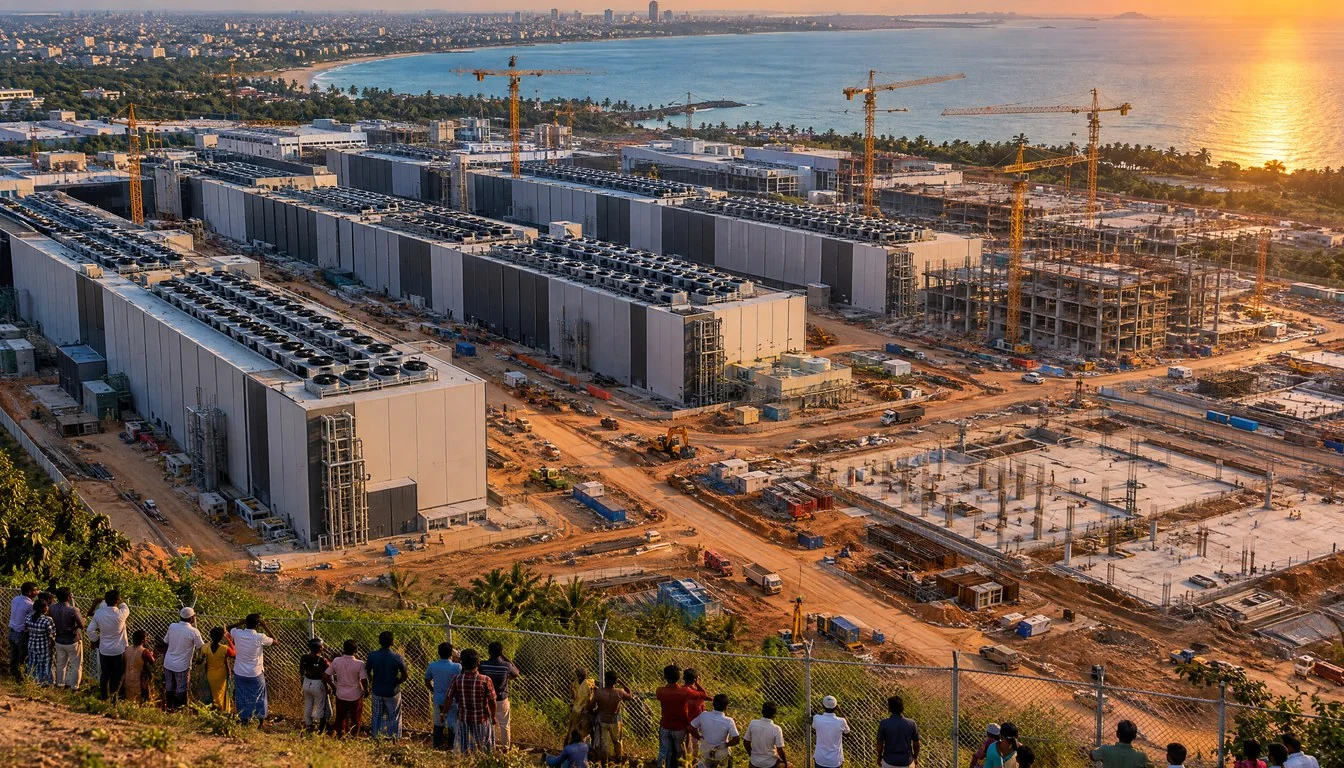
Google is pushing back publicly against mounting community criticism of its $15 billion artificial intelligence data-hub project near Visakhapatnam, in India's Andhra Pradesh state, as the facility's role in the global AI compute race comes into sharper focus. The company, building the gigawatt-scale campus with the Adani Group, says the site will become one of the largest AI infrastructure investments it has made anywhere outside the United States, feeding the compute pipeline that trains and serves Google's Gemini model family across Asia.
Key Details
As of October 12, 2026, the dispute has become a test case for how hyperscalers justify massive AI buildouts to the communities that host them. The stakes go beyond one campus in coastal India. Every major AI lab, from Microsoft and Meta to Google, is racing to secure power, land and water for the data centers that train frontier models and serve billions of inference requests a day. Visakhapatnam has turned into a flashpoint precisely because Google's AI ambitions there are colliding with a coastal city already short on water and power.
Why It Matters
This controversy highlights the growing tension between technological advancement and resource sustainability in developing regions. As AI infrastructure expands globally, communities are increasingly scrutinizing the environmental and social costs of massive data center projects, particularly in water-stressed areas.
Context
The AI compute race is driving unprecedented demand for data center capacity, with major tech companies investing billions in infrastructure to support training and deployment of large language models. Water and power availability have become critical factors in site selection for these facilities.
Source: Tech Insider. This article summarizes the linked reporting and distinguishes announced plans from demonstrated results.