2026 Nobel Prize in Physiology or Medicine Awarded for Optogenetics Discovery
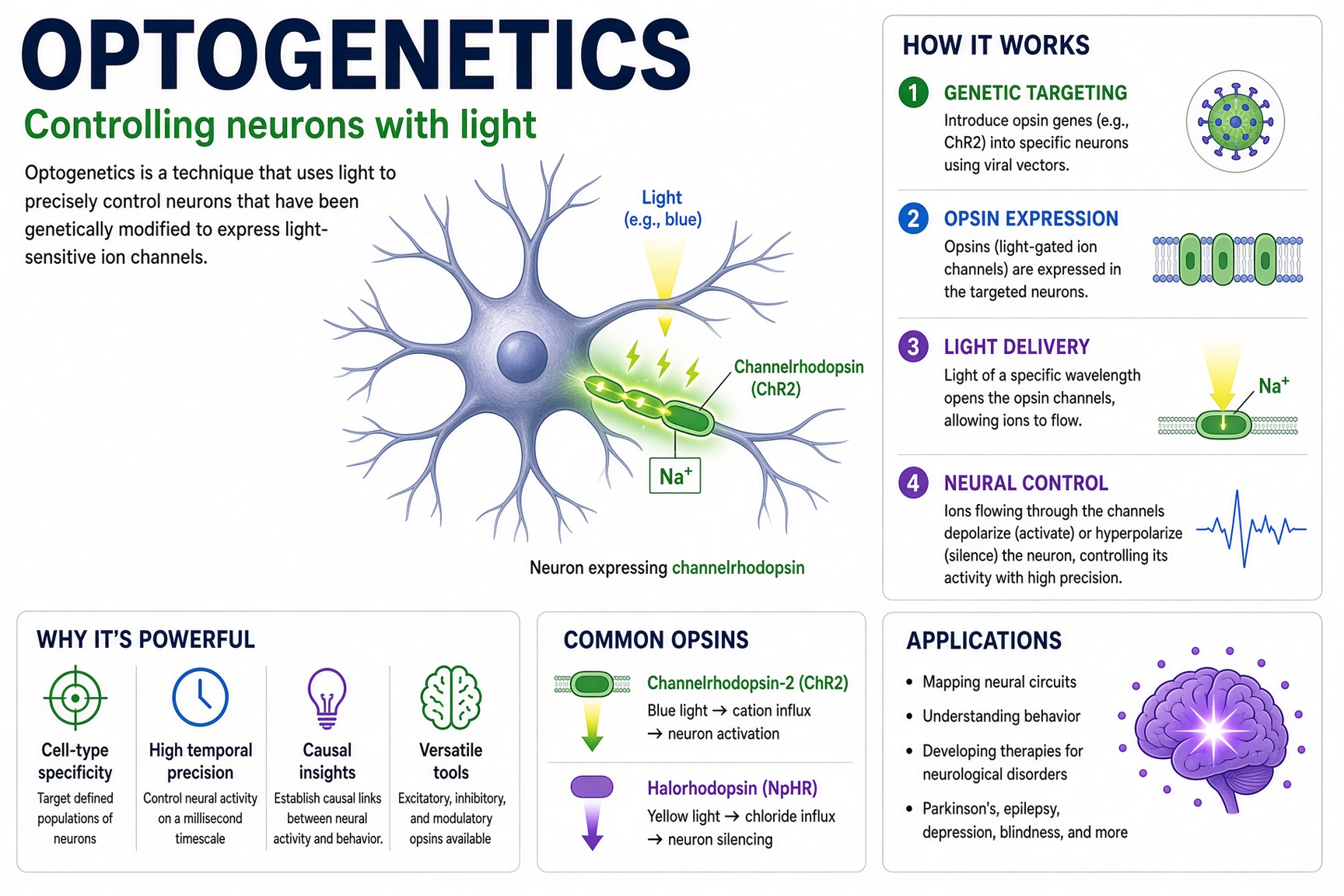
The Nobel Assembly announced on October 5, 2026 that Karl Deisseroth (Stanford), Peter Hegemann (Humboldt University), and Georg Nagel (University of Würzburg) share the Nobel Prize in Physiology or Medicine for discoveries enabling the optical control of cells, establishing the field of optogenetics.
Key Details
Their work identified light-sensitive microbial proteins (channelrhodopsins) that can be genetically targeted to specific neurons, allowing precise activation or inhibition with light. One optogenetic gene therapy is under FDA review; others are in clinical trials for retinitis pigmentosa. Chinese developers Zhongmou Medical and GenAns Tech also have clinical programmes.
Why It Matters
Optogenetics has transformed neuroscience research and is now transitioning to clinical application. The prize recognises a foundational technology enabling cell-type-specific manipulation with millisecond precision — impossible with drugs or electrodes.
Context
Deisseroth's lab pioneered mammalian optogenetics in 2005. Clinical translation includes Nanoscope, GenSight, Ray Therapeutics, and MapLight pipelines. The award highlights the convergence of basic microbial physiology, protein engineering, and circuit neuroscience.
Source: Live Trading News. This article summarizes the linked reporting and distinguishes announced plans from demonstrated results.